Stop Struggling with Linux! AnduinOS Makes Migration Effortless
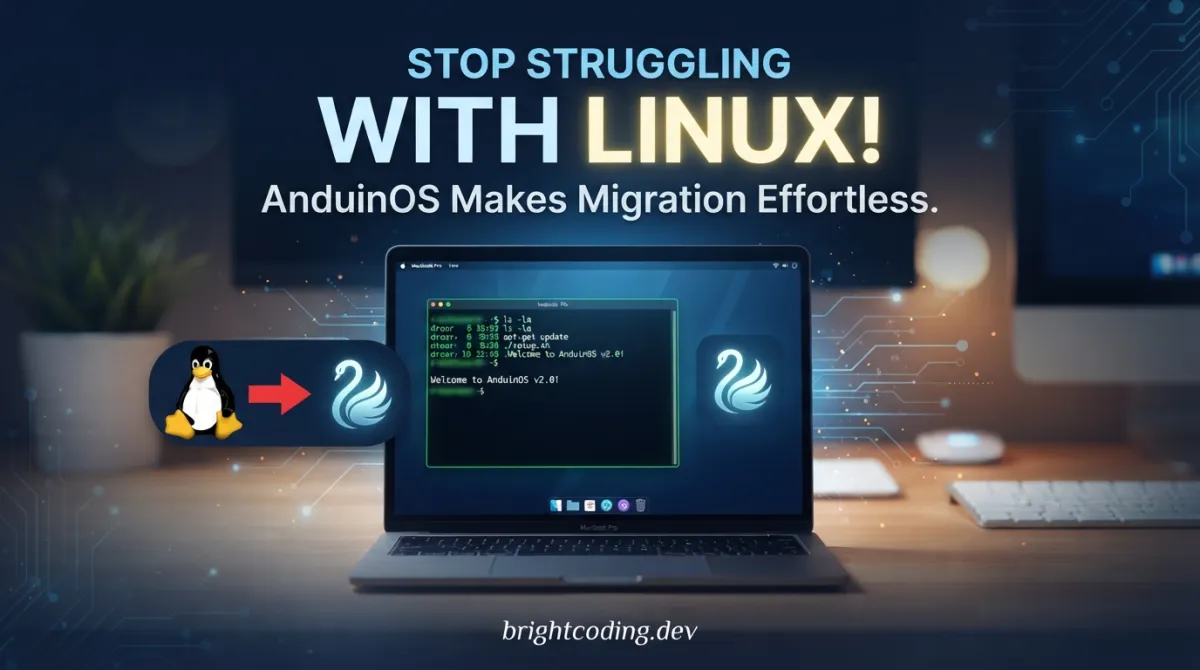
What if switching from Windows to Linux didn't require a computer science degree? What if you could boot into an operating system that felt instantly familiar—where the start menu was where you expected, where settings made intuitive sense, where you didn't spend hours googling why your Wi-Fi driver mysteriously vanished? For millions of developers, students, and everyday users trapped in expensive proprietary ecosystems, the Linux migration dream has always collided with a brutal reality: the learning curve is steep enough to cause vertigo.
Enter AnduinOS, the secret weapon that's making seasoned sysadmins whisper to their Windows-bound friends: "This changes everything." Built on rock-solid Ubuntu foundations yet meticulously crafted to feel like home for anyone escaping Microsoft's grip, AnduinOS isn't just another Linux distro throwing a different wallpaper on the same complexity. It's a deliberate, thoughtful reimagining of what a migration-friendly operating system should be. The GitHub repository at github.com/Anduin2017/AnduinOS tells only part of the story—what's happening in the trenches of user adoption is far more compelling.
The pain is real. You've seen it yourself: brilliant developers who can architect microservices in their sleep, reduced to frustrated novices when their Bluetooth headphones refuse to pair on a "user-friendly" Linux distribution. Creative professionals who'd love to escape Adobe's subscription prison, paralyzed by the fear that their next OS update will break color calibration they've spent weeks perfecting. Students on tight budgets who know Windows 11's hardware requirements are designed to obsolete their perfectly functional laptops.
AnduinOS was born from this exact frustration. Its creator, Anduin Xue, looked at the landscape of beginner-friendly distributions and saw a critical gap: familiarity without condescension, simplicity without sacrificing power. Most "easy" Linux distros either dumb things down to the point where power users feel caged, or they pay lip service to usability while still demanding terminal fluency for basic tasks. AnduinOS walks the razor's edge between these failures—and developers are noticing in explosive numbers.
What is AnduinOS?
AnduinOS is a custom Ubuntu-based Linux distribution engineered specifically for users transitioning from proprietary operating systems, particularly Windows. Created by developer Anduin Xue and maintained as an open-source project under the GNU General Public License, it represents a fundamentally different approach to the "beginner distro" category that has dominated Linux discourse for decades.
The project's philosophical foundation rests on a deceptively simple insight: migration friction kills Linux adoption more than any missing feature. Users don't abandon Windows because they can't find a Linux equivalent for their software—they abandon Linux because the experience of finding, installing, and using that software feels alien and hostile. AnduinOS attacks this problem at the interface layer, the workflow layer, and the psychological layer simultaneously.
Built atop Ubuntu's legendary hardware compatibility and LTS stability, AnduinOS inherits one of Linux's most robust ecosystems: access to over 60,000 packages in the Ubuntu repositories, Snap and Flatpak universal application support, and a kernel optimized for broad device compatibility. But where it diverges from stock Ubuntu is in its meticulous attention to interaction patterns that Windows migrants intuitively understand. The GNOME-based desktop environment receives substantial modification through custom extensions and patches—not to create a crude Windows clone, but to establish conceptual continuity that reduces cognitive load during the critical first weeks of adoption.
The project is currently experiencing significant momentum across developer communities. Its GitHub repository shows active issue tracking, community discussions, and a growing contributor base. The presence of a dedicated documentation site at docs.anduinos.com, an official website with download infrastructure, and community channels including Revolt chat indicates organizational maturity rare for a specialized distribution. The project's funding through user donations rather than corporate backing suggests genuine grassroots demand rather than astroturfed hype.
Critically, AnduinOS maintains full GPL licensing, ensuring users retain the four essential software freedoms: to run, study, modify, and distribute the operating system. This isn't merely ideological posturing—it means organizations can deploy AnduinOS without license audit anxiety, and developers can inspect, fork, or contribute to the build system without legal ambiguity.
Key Features That Set AnduinOS Apart
ArcMenu Integration with Strategic Defaults. The project's logo itself references the ArcMenu GNOME extension, and this isn't cosmetic. AnduinOS implements a heavily customized application menu that restores hierarchical organization GNOME deliberately abandoned. For Windows migrants, the ability to browse applications by category—"Office," "Graphics," "Development"—rather than searching for everything eliminates a massive friction point. The implementation goes deeper than skin-deep theming: window management behaviors, taskbar positioning, and system tray functionality all receive attention.
Streamlined Build System for Customization. Unlike distributions that treat their ISO generation as opaque alchemy, AnduinOS exposes its entire construction process through a clean Makefile-based system. Technical users can modify ./src/args.sh to inject custom packages, tweak kernel parameters, or embed organizational configurations. This transparency transforms AnduinOS from a consumer product into a foundation for derivative works—schools can build locked-down classroom variants, MSPs can create standardized client deployments, and hobbyists can learn Linux internals by observing a functional build pipeline.
Ubuntu Compatibility Without Ubuntu Complexity. By maintaining strict compatibility with Ubuntu's package repositories and update mechanisms, AnduinOS avoids the isolation trap that snares many custom distributions. Users aren't stranded when they need software outside the curated selection—every tutorial, PPA, and Stack Overflow solution for Ubuntu applies directly. This ecosystem inheritance is strategically invaluable; it means the "AnduinOS community" effectively includes the entire Ubuntu user base as a support resource.
Active Documentation and Community Infrastructure. The project maintains dedicated documentation separate from its code repository, a professionalism indicator often missing in niche distributions. Community support flows through structured GitHub Discussions rather than chaotic chat channels, enabling searchable knowledge accumulation. The Revolt chat presence acknowledges that not all users want corporate-controlled communication platforms—an ideological consistency that resonates with privacy-conscious migrants.
GPL Licensing with Transparent Attribution. The comprehensive OSS.md file listing all included open-source software demonstrates unusual diligence in license compliance. For organizations evaluating desktop Linux deployments, this documentation reduces legal review burden significantly compared to distributions with murky provenance.
Real-World Use Cases Where AnduinOS Dominates
Corporate Windows Migration at Scale
Enterprise IT departments face an unprecedented squeeze: Windows 10 end-of-life looms, Windows 11's TPM requirements obsolete massive hardware fleets, and licensing costs spiral upward. Yet previous Linux migration attempts collapsed under helpdesk burden—users couldn't adapt, support costs exploded, projects were abandoned. AnduinOS's interface familiarity dramatically compresses the retraining timeline. A user who recognizes where to find settings, how to install software, and how to organize their workflow doesn't generate tickets. The build system's customization enables pre-configuration of VPN clients, certificate authorities, and domain integration before deployment—transforming migration from a user-support crisis into a managed infrastructure project.
Educational Institution Budget Rescue
School districts and universities worldwide face impossible technology funding equations. AnduinOS enables hardware lifecycle extension without sacrificing usability: machines that fail Windows 11 compatibility checks become perfectly viable Linux workstations. The familiar interface reduces instructor and student friction, while the GPL licensing eliminates the per-seat accounting complexity that consumes administrative resources. The build system allows IT departments to create locked-down examination environments or curriculum-specific software bundles with controlled precision.
Developer Workstation Standardization
Development teams increasingly reject macOS's hardware premium and Windows's WSL complexity, yet standardizing on Linux creates onboarding friction for team members with varying open-source experience. AnduinOS provides a negotiated middle ground: experienced developers retain full Ubuntu ecosystem access for containers, Kubernetes, and language toolchains, while team members transitioning from other platforms aren't paralyzed by interface alienation. The distribution becomes a team standard that doesn't sacrifice anyone's productivity.
Privacy-Focused Personal Computing
Users awakening to comprehensive surveillance capitalism seek escape routes from telemetry-laden operating systems, but many "privacy distributions" present interfaces so foreign that users retreat to familiar compromise. AnduinOS offers graduated migration: start with familiar patterns, then progressively explore privacy-hardening configurations as comfort grows. The Ubuntu foundation means privacy tools from Tor Browser to VeraCrypt to secure communication platforms install through familiar mechanisms, rather than requiring arcane compilation from source.
Step-by-Step Installation & Setup Guide
Prerequisites
Before beginning, verify your hardware meets baseline requirements: 4GB RAM minimum (8GB recommended), 25GB storage, and 64-bit processor architecture. AnduinOS currently targets x86_64 systems; ARM support appears in planned future work per repository documentation.
Downloading the ISO
Navigate to the official distribution website at www.anduinos.com and download the current release ISO. Verify checksums if provided—this is particularly important for security-conscious users establishing initial trust with a new distribution.
Creating Bootable Media
Use standard USB creation tools compatible with Ubuntu ISOs:
# Using dd (Linux/macOS terminal - replace sdX with your USB device)
sudo dd if=anduinos.iso of=/dev/sdX bs=4M status=progress conv=fsync

# Using Rufus or Ventoy (Windows)
# These graphical tools handle ISO writing with familiar interfaces
Critical warning: The of=/dev/sdX parameter in dd commands targets the entire device, not a partition. Misidentification destroys data on the wrong drive. Use lsblk or Disk Management to confirm device identifiers.
Installation Process
Boot from the created USB media. The installer derives from Ubuntu's ubiquity framework, presenting familiar partitioning, timezone, and user creation dialogs. The repository notes plans for a customized installer replacement—current installations leverage proven Ubuntu infrastructure.
For dual-boot configurations with Windows, disable Fast Startup in Windows power settings first. This prevents NTFS filesystem locking that corrupts shared partitions. The installer detects existing Windows installations and offers alongside-installation options.
Post-Installation Configuration
First boot presents the customized GNOME environment. Essential immediate steps:
# Update system packages to current security patches
sudo apt update && sudo apt upgrade -y

# Verify additional drivers availability (proprietary graphics, Wi-Fi)
ubuntu-drivers devices
sudo ubuntu-drivers autoinstall
The ArcMenu configuration, window management extensions, and system tray functionality activate automatically—no manual GNOME extension juggling required, unlike stock Ubuntu.
REAL Code Examples from the Repository
AnduinOS's build system transparency deserves detailed examination. The repository exposes its entire construction methodology, enabling study, modification, and derivative creation.
Core Build Command
The fundamental build operation is almost shockingly simple—a deliberate design choice lowering contribution barriers:
# Primary build command - generates bootable ISO from source
make
This single command orchestrates the entire pipeline: downloading base Ubuntu components, applying AnduinOS modifications, injecting custom packages and configurations, and producing a distributable ISO in ./src/dist/. The simplicity belies sophisticated underlying automation—dependency resolution, repository synchronization, and image assembly occur without user intervention. For developers accustomed to Linux From Scratch complexity or Gentoo's manual stage building, this approach exemplifies progressive disclosure: accessible entry point with deep customization available when needed.
Build Parameter Configuration
The distribution's customization interface resides in a single, well-commented configuration file:
# Edit this file to modify build parameters before running make
# Located at: ./src/args.sh

# Example modifications might include:
# - Custom package lists for organizational deployments
# - Kernel parameter adjustments for specialized hardware
# - Repository mirror selection for geographic optimization
# - Desktop environment tuning for specific user profiles
This architectural decision—centralized configuration with Makefile execution—enables version-controlled customization. Organizations can maintain private forks with modified args.sh files, tracking their specific configurations through git history while inheriting upstream build system improvements. The pattern mirrors infrastructure-as-code practices that DevOps↗ Bright Coding Blog practitioners recognize immediately.
Virtual Machine Testing Workflow
The documentation emphasizes immediate validation capability:
# After successful make completion:
# ISO location: ./src/dist/anduinos-[version].iso

# Mount in virtual machine for testing without hardware commitment
# QEMU/KVM example:
qemu-system-x86_64 -cdrom ./src/dist/anduinos-[version].iso -m 4096 -enable-kvm

# VirtualBox: Create new VM, attach ISO as optical drive, boot
This build-test-iterate cycle accelerates customization development. Organizations can validate modified builds in isolated environments before physical deployment, and contributors can verify changes without dedicating hardware. The approach demonstrates mature release engineering thinking rarely present in community distributions.
Extension Patching Infrastructure
The repository structure reveals sophisticated GNOME modification capabilities:
src/mods/30-gnome-extension-arcmenu-patch/
├── logo.svg              # Branded visual identity
├── extension.js.patch    # Behavioral modifications
├── metadata.json.patch   # Integration configuration
└── ...                   # Additional patch files
This modular patch system enables surgical GNOME customization without maintaining complete forked extensions. When ArcMenu upstream releases updates, AnduinOS can often rebase its modifications rather than manually porting changes. The numeric prefix (30-) suggests ordered application during build—multiple modification sets compose the final system through predictable, debuggable stages.
Advanced Usage & Best Practices
Fork for Organizational Deployment. Rather than post-install configuration scripts that break with updates, maintain a private fork with customized args.sh and additional src/mods/ entries. This infrastructure-as-distribution approach treats operating system builds as reproducible artifacts rather than snowflake installations.
Layered Testing Strategy. The planned "Layer based OS" architecture mentioned in repository future work suggests eventual variants (WSL, Server, Pro, Lite, Home, Workstation). Current users can approximate this by maintaining multiple args.sh profiles for different deployment contexts—development workstations versus kiosk terminals versus home theater PCs.
Community Contribution Pathway. Before submitting issues, engage with GitHub Discussions to validate problems and solutions. The project's discussion-first culture builds searchable knowledge; jumping directly to Issues with configuration questions wastes maintainer attention and misses accumulated community wisdom.
Kernel Customization Preparation. The planned "Customized kernel with our own override" indicates future flexibility. Advanced users can preview this capability by studying Ubuntu's kernel build tooling, preparing for seamless transition when AnduinOS exposes kernel configuration through the same args.sh interface.
Comparison with Alternatives
| Dimension | AnduinOS | Linux Mint | Zorin OS | Pop!_OS | Stock Ubuntu |
|---|---|---|---|---|---|
| Base Foundation | Ubuntu LTS | Ubuntu LTS | Ubuntu LTS | Ubuntu (modified) | Ubuntu |
| Interface Philosophy | Familiar migration | Classic desktop | Windows clone | Power user optimized | GNOME default |
| Build Transparency | Full source, Makefile | Partial | Proprietary elements | Partial | N/A (upstream) |
| Licensing | GPL fully | GPL | Mixed/proprietary tools | GPL | GPL |
| Corporate Readiness | High (custom builds) | Moderate | Moderate (paid tiers) | High (System76) | High (Canonical support) |
| Hardware Vendor | Independent | Independent | Independent | System76 | Canonical/Community |
| Extension Modification | Open patch system | Cinnamon native | Closed theming | COSMIC transition | None |
| Community Governance | Donation-funded, independent | Community | Commercial | Commercial | Canonical-controlled |
Why AnduinOS over Linux Mint? Mint's Cinnamon interface appeals to traditionalists but represents a dead-end skill investment—Cinnamon expertise doesn't transfer to other environments. AnduinOS's GNOME foundation with strategic modifications builds toward broader Linux ecosystem fluency.
Why AnduinOS over Zorin? Zorin's familiar interface requires proprietary components and paid tiers for full functionality. AnduinOS achieves comparable usability without compromising software freedom or introducing commercial gatekeeping.
Why AnduinOS over Pop!_OS? Pop targets developers already comfortable with Linux, optimizing for tiling window management and gaming workflows. AnduinOS serves the larger population still approaching Linux's shores—different missions, different optimal users.
Frequently Asked Questions
Is AnduinOS truly free, or are there hidden costs? AnduinOS is released under GPL license with no monetary cost. The project accepts donations to sustain development but does not restrict functionality for non-paying users. All source code, build tools, and documentation are openly available.
Can I run Windows applications on AnduinOS? Through Ubuntu's compatibility layers, Wine and Bottles install normally for Windows application execution. However, AnduinOS's design philosophy emphasizes finding native Linux alternatives that integrate better with the system—migration support, not emulation dependence.
How does updating work? Will customizations break?
Standard apt update && apt upgrade applies Ubuntu security and package updates. AnduinOS-specific components update through the same mechanism. The GNOME extension modifications are build-time patches rather than runtime overrides, reducing update fragility compared to manually installed extensions.
Is this suitable for complete Linux beginners? Designed specifically for this audience. The familiar interface reduces initial overwhelm, while the Ubuntu foundation ensures abundant tutorial resources apply directly. Users grow into Linux proficiency rather than requiring it as prerequisite.
Can I contribute to development without deep Linux expertise? The build system's Makefile simplicity lowers contribution barriers. Documentation improvements, translation efforts, and user testing provide valuable contribution paths without kernel programming knowledge.
What hardware works out-of-box? Inherits Ubuntu's extensive hardware compatibility database. Most systems running Ubuntu successfully will run AnduinOS identically. Proprietary drivers install through the same "Additional Drivers" interface.
How is this different from just installing Ubuntu and adding themes? AnduinOS represents curated integration rather than cosmetic approximation. The modifications are tested as a cohesive system, updates are validated against the full configuration, and the build system enables reproducible deployment at scale—impossible with manual post-install theming.
Conclusion
The Linux desktop has witnessed decades of "year of the Linux desktop" prophecies, each collapsing against the immovable object of migration friction. AnduinOS doesn't pretend to solve every barrier—hardware vendor cooperation, software industry business models, and institutional inertia remain formidable. But it precisely targets the friction that distributions can control: the psychological and cognitive costs of interface transition.
By building on Ubuntu's industrial-strength foundation, maintaining full open-source integrity, and exposing its construction methodology for community extension, AnduinOS earns consideration beyond typical beginner-distribution dismissal. It represents mature migration engineering—not dumbing down Linux, but meeting users where they are and guiding them forward.
For Windows users contemplating escape, for IT departments calculating licensing renewal pain, for developers seeking team-standardization without sacrifice—AnduinOS deserves immediate evaluation. Download the current release from www.anduinos.com, examine the source at github.com/Anduin2017/AnduinOS, and join the community discussions shaping its evolution. The Linux transition you've postponed because "it's too hard" just got significantly less hard. The question isn't whether you're ready for Linux anymore—it's whether Linux is finally ready for you.
Outils recommandés
Explore on the BrightCoding network
Hand-picked resources from our other sites.
Stop Scraping Finance Data Manually! FinNLP Does It All
FinNLP by AI4Finance Foundation automates LLM training pipelines for financial data. Learn how to collect news, social media, and SEC filings across US and Chin...
Lakr233/Asspp: Multi-Region App Store Manager for Apple IDs
Lakr233/Asspp is an open-source Swift application for managing multiple Apple IDs across App Store regions. Features include multi-account support, direct IPA d...
OpenCloudGaming/OpenNOW: Open-Source GeForce NOW Desktop Client
OpenCloudGaming/OpenNOW is an MIT-licensed, community-built GeForce NOW client with 2,131 stars. Features include Electron desktop app, experimental native Rust...
Continuez votre lecture
Why Alexandrie is the Ultimate Markdown Note-Taking App

Why CrossPaste is the Ultimate Game Changer for Clipboard Management
Why Chandra is the Ultimate OCR Tool for Handwriting and Tables

Stop Coding Alone: OPC-Skills Gives Your AI Agent Superpowers
Commentaires 0
Aucun commentaire pour l'instant. Soyez le premier à réagir !